The short answer
A Velux conversion is cheaper and simpler — skylights only, no roof shape change — but requires sufficient existing head height (2.2 m+). A dormer adds a projecting box to the roof slope, creating more headroom and floor area at higher cost. The right choice depends mainly on your existing ridge height. See is my loft suitable? to check your head height first.
For most homeowners comparing loft conversion options, the first fork in the road is between a Velux (rooflight) conversion and a dormer. Both are popular, both usually fall within permitted development on the rear of a typical UK terraced or semi-detached house, and both can produce a comfortable extra room. The difference is in what they achieve and what they cost — and the most important variable in that decision is a single measurement: how much head height you already have.
Dormer vs Velux at a glance
- Velux cost £20,000–£35,000 typical
- Dormer cost £30,000–£55,000 typical
- Velux planning Rarely needed
- Dormer planning Rear dormer often PD; front needs permission
- Space added Velux: uses existing; dormer: creates new headroom zone
- Disruption Velux: lower; dormer: higher (structural work)
What a Velux conversion involves
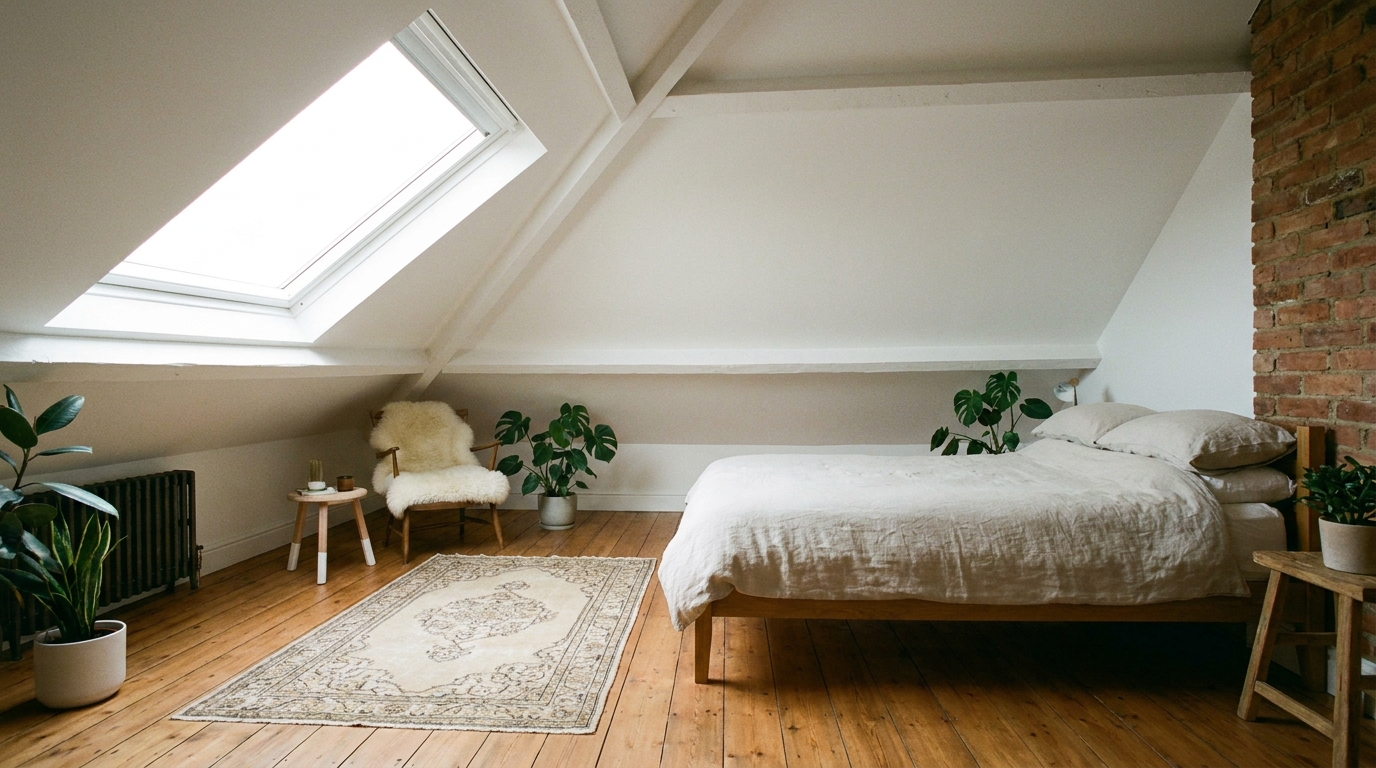
A Velux conversion (or rooflight conversion) inserts roof windows into the existing slope, strengthens the floor joists to carry the room load, and insulates the roof between the rafters. The external roof shape is completely unchanged — from the street the only visible addition is the roof windows. Work is largely internal once the windows are fitted, keeping weather exposure and disruption lower than for a dormer. A good Velux conversion can produce a light, attractive room, but it is entirely dependent on the space that already exists between the floor and the ridge. If that space provides 2.2 m or more at the highest point, a Velux can work; if not, the usable floor area is severely reduced by the sloping eaves, and a dormer becomes necessary to create a liveable room.
What a dormer conversion involves
A dormer adds a box-shaped structure projecting vertically from the roof slope. It has its own vertical side walls (cheeks), a flat or low-pitched roof, and typically a large rear-facing window or sliding door. The box creates a zone where the ceiling is full height and the floor extends right to the window line, dramatically increasing usable floor area versus a Velux in the same roof. The structural work is more involved — new joists, new steels to support the dormer, and a more complex external envelope — which is why a dormer costs more and takes longer. It also means more external work and a longer period of weather exposure during the build.
| Factor | Velux | Dormer |
|---|---|---|
| Roof shape change | None | Box projection added |
| Typical cost | £20,000–£35,000 | £30,000–£55,000 |
| Head height needed | 2.2 m+ already | Creates head height |
| Build time | 4–6 weeks typical | |
| Planning (rear) | Rarely needed | Usually PD within limits |
| Disruption | Lower | Higher |
When to choose Velux
A Velux conversion is usually the right choice when your head height is already generous — 2.4 m or more at the ridge — and you want the simplest, most cost-effective route to a new room. It also suits situations where you want minimal impact on the external appearance, particularly in conservation areas where planning officers may object to a dormer, or where the street scene of your particular road disfavours dormers. Many homeowners in terraces with steep Victorian pitches find a Velux gives a perfectly spacious master bedroom or office without the extra cost of a dormer. The ceiling follows the slope of the roof on both sides, which some people find charming; others find it reduces usable furniture positions at the eaves.
When to choose a dormer
A dormer is generally the right choice when your existing head height falls below 2.2 m, when you want maximum usable floor area, or when you want a more conventional-feeling square room rather than one with sloping ceilings. It also makes sense when the extra cost is worth it for a large, well-lit space — a full-width rear dormer with a Juliet balcony, for example, can transform a dark, cramped loft into the most attractive room in the house. For loft conversion costs, the dormer premium over a Velux is roughly £10,000–£20,000 for a comparable project. See also all conversion types if a hip-to-gable or mansard might suit your roof better.
The planning position
Both types can usually be built without a full planning application on the rear of a typical English property under permitted development rules — provided the total roof volume addition stays within 40 m³ for a terrace or 50 m³ for a semi or detached. Front dormers are treated differently and usually need permission. Velux conversions rarely change the volume enough to trigger the limits. Always check with your local planning authority or submit a Lawful Development Certificate application before starting work. See do I need planning permission? This page is general information, not professional planning or structural advice — consult a qualified specialist for your property.
Frequently asked questions
Is a dormer or Velux conversion better?
It depends on your head height. If you already have 2.2 m or more at the ridge, a Velux is usually the most cost-effective choice. If you don’t, a dormer creates the headroom you need. Both can produce excellent rooms.
How much more does a dormer cost than a Velux?
A rear dormer typically costs £10,000–£20,000 more than a comparable Velux conversion, reflecting the additional structural work, materials and build time involved in adding the projecting box and its roof.
Does a Velux conversion need planning permission?
Rarely. A Velux conversion does not change the roof volume in any meaningful way and usually falls well within permitted development rights. However, listed buildings, conservation areas and some new-build estates may impose restrictions.
Can I convert my loft with just skylights?
Yes, if your head height allows it. A rooflight-only conversion using Velux or similar windows is a legitimate and popular option that often costs less, builds faster and needs no planning permission — provided your ridge height meets the 2.2 m minimum.
Sources & further reading
- Planning Portal — permitted development for roof alterations and dormer volume limits
- LABC (Local Authority Building Control) — building regulations for habitable room head height and floor loading
- GOV.UK — Town and Country Planning (General Permitted Development) (England) Order 2015
- RICS — valuation guidance on loft conversions and property improvement assessments
This is general information about loft conversions in the UK, not professional planning, structural, building or legal advice. Costs are typical illustrations, not quotes; timescales and outcomes vary with your property, location and chosen specialist. Always consult a qualified specialist and your local planning authority before starting work.