The short answer
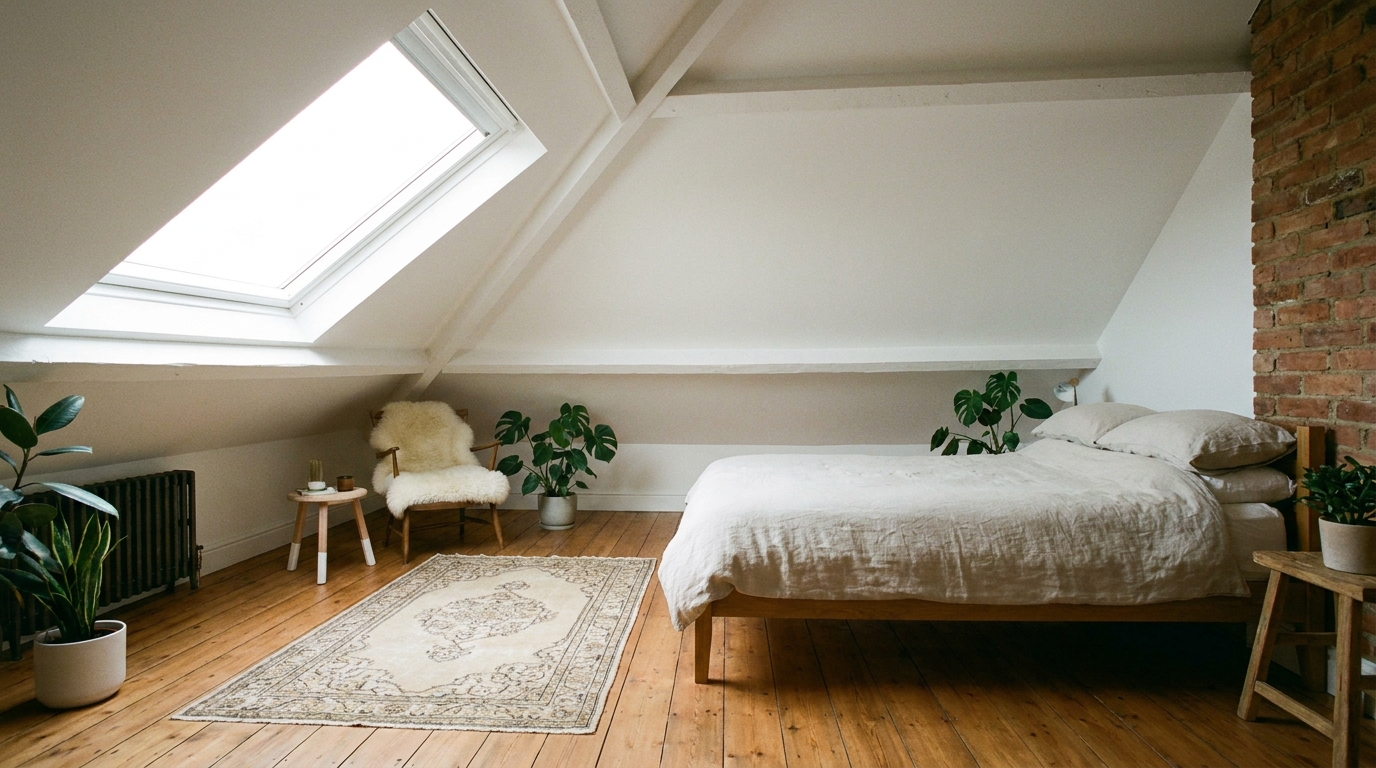
A loft conversion is the process of transforming an unused roof space into a habitable room — typically a bedroom, bathroom, home office or playroom — without extending the house outwards. It is one of the most space-efficient improvements available to UK homeowners, using volume that already exists above the ceiling. Most conversions require building regulations approval even when planning permission is not needed, and the type of conversion that suits your home depends on your roof shape, available head height and budget.
For millions of UK homeowners, the loft sits empty above the top floor — heated by the house below, structurally already part of the building, yet contributing nothing to daily life. A loft conversion changes that by making the space meet the legal and practical standards required for someone to sleep, work or bathe there. Unlike a rear extension, which takes garden space, or a side extension, which takes driveway or side access, a loft conversion works entirely within the existing shell. That makes it attractive in terraced and semi-detached streets where garden depth is limited and planning neighbours can be sensitive.
Loft conversions at a glance
- Most common types Dormer, Velux, hip-to-gable, mansard
- Planning permission Often not needed — check permitted development rules
- Building regs Always required for a habitable loft conversion
- Typical cost £20,000–£65,000+ depending on type and size
- Added value Typically 15–25% on UK properties, varies by location
- Time to complete 6–14 weeks for most conversions
What counts as a loft conversion?
Not every loft that receives a hatch and a ladder is a conversion in the legal sense. A genuine loft conversion produces a habitable room — a space that meets building regulations for ceiling height, floor loading, fire escape, insulation and natural light. The minimum head height is 2.2 metres at the highest point, measured before any flooring is laid. If your ridge height is below that figure, a conversion that raises the ridge or adds dormers may still be possible, but it changes the scope and cost considerably. See minimum head height for a loft conversion for the detail.
The term “loft conversion” covers several distinct construction types, each suited to different roof shapes. The choice of type determines how much new space you gain, what the building looks like from outside and how much disruption the build causes. It also affects whether you need planning permission and what the project costs.
The main types of loft conversion
Four types account for the vast majority of UK loft conversions:
- Velux (rooflight): The simplest and least expensive option. Skylights are inserted into the existing roof slope and the floor is strengthened. The roof shape does not change, so it almost always falls within permitted development. It suits roofs where the head height is already sufficient.
- Dormer: A box-shaped extension projects vertically from the roof slope, adding headroom and floor area. The rear dormer is the most common single addition; it usually falls within permitted development on the rear of the property.
- Hip-to-gable: Used on semi-detached and detached homes with hipped roofs. The sloping hip end is rebuilt as a vertical gable, gaining a substantial new triangular space. Usually requires planning permission.
- Mansard: The most transformative and expensive type. One or both roof slopes are replaced with near-vertical walls and a shallow flat top, dramatically increasing internal volume. Almost always requires planning permission and is more common in London.
For a fuller comparison, see types of loft conversion and dormer vs Velux.
| Type | Roof change | Typical cost | Planning needed? |
|---|---|---|---|
| Velux / rooflight | None (skylights only) | £20,000–£35,000 | Rarely |
| Rear dormer | Box projection rear | £30,000–£55,000 | Often not (PD) |
| Hip-to-gable | Hip rebuilt as gable | £35,000–£60,000 | Usually yes |
| Mansard | Roof rebuilt near-vertical | £45,000–£75,000+ | Yes |
What building regulations cover
Regardless of whether planning permission is needed, building regulations approval is required for every loft conversion that creates a habitable room. The regulations cover structural safety (strengthened floor joists, new steels), fire safety (a protected escape route from the new room to the front door, interconnected smoke alarms), insulation (walls, roof and any new floor), staircase design, glazing and ventilation. A building regulations inspector from your local authority or an approved inspector will visit at key stages and issue a completion certificate — a document you will need when you sell or remortgage. See loft conversion building regulations for the full checklist.
Is my loft suitable?
The three main suitability factors are head height, roof structure and access. Head height of at least 2.2 m at the ridge is the standard starting point, though dormers can compensate for lower-pitched roofs by creating a zone of full-height floor area. Roof structure matters because modern trussed roofs (common in homes built after around 1960) are engineered to be lightweight and cannot simply have their timbers cut without structural redesign — whereas older cut-rafter roofs are generally more straightforward to adapt. Access requires a staircase that meets building regulations, which means finding space on the floor below for a permanent, compliant stair — the most overlooked constraint. See is my loft suitable for conversion? for a self-assessment guide.
Planning permission — the basics
Many loft conversions in England fall within permitted development rights, meaning they do not need a formal planning application. The key limits are that the total additional roof volume must not exceed 40 cubic metres for terraced houses or 50 cubic metres for detached and semi-detached properties, the extension must not be higher than the existing ridge, and no element must project forward of the principal elevation. Conservation areas, listed buildings and some new-build estates remove or restrict permitted development rights. Always check with your local planning authority or submit a Lawful Development Certificate application before starting work. Read more at do I need planning permission for a loft conversion?
How long does a loft conversion take?
A simple Velux conversion might complete in four to six weeks; a full dormer or hip-to-gable conversion typically takes eight to twelve weeks; a mansard or complex project may run to fourteen weeks or more. The timeline depends on structural complexity, the number of trades involved (structural engineer, builder, electrician, plumber, plasterer), and how quickly building regulations inspections are scheduled. Most homeowners can remain in the property throughout, though the top-floor landing tends to be dusty and noisy during the main structural phase. For a fuller breakdown, see how long does a loft conversion take?
This page is general information about loft conversions in the UK, not professional building, planning or structural advice. Every property is different — always consult a qualified specialist and your local planning authority before starting work.
Frequently asked questions
Do all loft conversions need planning permission?
No. Many fall within permitted development rights in England, provided the volume, height and position limits are met. Conservation areas and listed buildings are exceptions. Always confirm with your local planning authority or apply for a Lawful Development Certificate.
What is the minimum ceiling height for a loft conversion?
Building regulations require a minimum of 2.2 metres at the highest point of the new room. Most surveyors and builders measure this before quoting, as a head height below 2.2 m typically means a dormer or ridge-raising project is needed.
Is a loft conversion cheaper than an extension?
Often, yes. A loft conversion works within the existing structure and footprint, avoiding foundations and extensive groundworks. However, the costs overlap: a simple rear extension can be cheaper than a complex mansard. Typical loft conversion costs range from £20,000 to over £65,000.
Does a loft conversion add value to a house?
Typically, yes — adding a bedroom via a loft conversion is widely cited as one of the highest-value home improvements, often adding 15–25% to a property’s value in UK markets, though the precise uplift depends heavily on location, property type and the quality of the conversion.
Sources & further reading
- Planning Portal — permitted development rights for loft conversions and roof alterations
- LABC (Local Authority Building Control) — building regulations for habitable loft rooms
- RICS — guidance on adding value through home improvements and property valuations
- GOV.UK — Planning Practice Guidance on householder permitted development
This is general information about loft conversions in the UK, not professional planning, structural, building or legal advice. Costs are typical illustrations, not quotes; timescales and outcomes vary with your property, location and chosen specialist. Always consult a qualified specialist and your local planning authority before starting work.