The short answer
A loft conversion adds an upstairs room without using garden space; a rear extension adds downstairs living space but takes garden. Loft conversions are typically cheaper and simpler to plan; extensions add flexible open-plan living space. The choice depends on what kind of space you need and your garden depth. See loft conversion costs for current price ranges.
Adding a bedroom in the loft and adding a kitchen-diner at the rear of the house are not competing answers to the same question — they solve different problems. Most homeowners considering both are trying to address either a bedroom shortage (loft conversion wins) or a need for more open-plan living space (extension usually wins). Understanding what each option genuinely delivers, what it costs and how the planning position compares makes the decision straightforward.
Loft conversion vs extension at a glance
- Loft conversion cost £20,000–£75,000+ depending on type
- Rear extension cost £25,000–£80,000+ depending on size
- Loft: best for Extra bedroom, en suite, office
- Extension: best for Open-plan kitchen-diner, living space
- Loft planning Often permitted development
- Extension planning Single-storey rear: often PD; two-storey: usually needs permission
What a loft conversion gives you
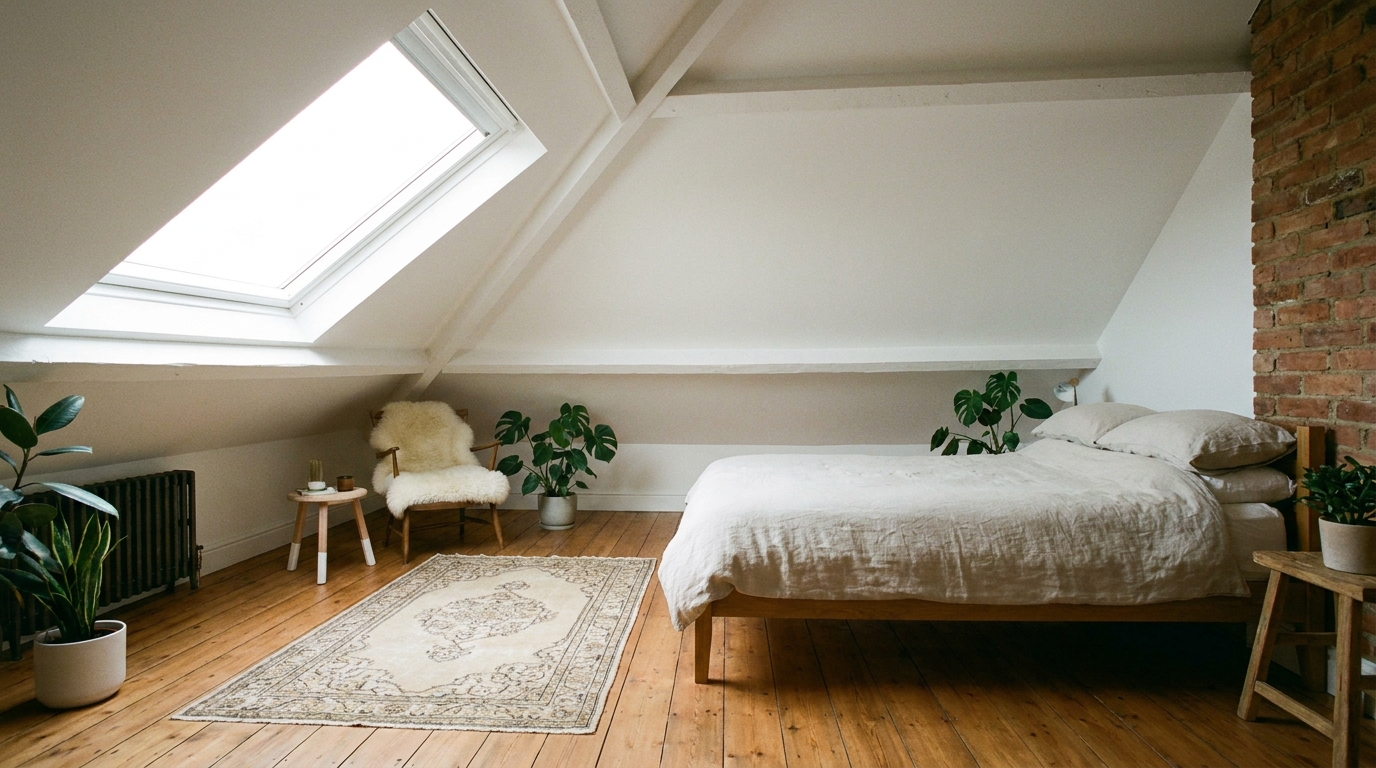
A loft conversion creates new space vertically: it turns unused roof volume into a habitable room without touching the garden. The most common use is an additional bedroom — often a master bedroom with en suite, freeing up a first-floor bedroom, or a children’s room, guest room or home office. The room is upstairs, which suits some uses better than others: it is private, away from the main living areas, and benefiting from roof-level light and views. A loft conversion does not change the footprint of the house, does not use garden space and — crucially for many homeowners — often does not require planning permission. Its limitations are that it does not add open-plan living space, and in smaller lofts the room can feel tight once a staircase is accounted for.
What a rear extension gives you
A rear extension adds ground-floor or first-floor space at the back of the house, most commonly as a large kitchen-dining-living room. It extends the footprint of the house over what was garden or yard. The space it creates is very different from a loft room: it is open-plan, connected directly to the kitchen and living areas, full of natural light from a rear wall of glazing, and suited to family life in a way that a loft bedroom is not. A single-storey rear extension of up to 3 m (semi-detached) or 4 m (detached) depth often falls within permitted development in England under the prior approval procedure. Beyond those depths, a planning application is needed. Extensions also take garden space — a constraint for families with young children or small plots.
| Factor | Loft conversion | Rear extension |
|---|---|---|
| Type of space | Bedroom / office | Kitchen-diner / living room |
| Garden impact | None | Reduces garden |
| Typical cost | £30,000–£65,000 | £30,000–£80,000 |
| Planning (standard) | Often PD | Single-storey often PD (prior approval) |
| Added value | 15–25% (bedroom premium) | 10–20% (depends on size) |
| Build time | 8–12 weeks | 8–16 weeks |
Which adds more value?
RICS guidance and estate agent surveys suggest both types of improvement add value in the right circumstances. A loft conversion that creates an additional bedroom is particularly well-evidenced — the bedroom count is a primary price driver in UK property, and going from two to three or three to four bedrooms typically adds 15–25% of value. A rear extension that creates an impressive kitchen-diner is valued by buyers for lifestyle and functionality but is less directly tied to a price-per-bedroom metric; the uplift is real but more dependent on the quality and size of the space created. In high-value markets both can deliver positive returns; in price-compressed markets the arithmetic is tighter for both. See does a loft conversion add value? for the detail on loft conversion returns.
Which is right for you?
The answer comes from your specific situation rather than a general rule. If you need an extra bedroom, a loft conversion almost always wins on cost, planning simplicity and disruption. If you need open-plan kitchen-living space, an extension is typically the better solution. If you need both, doing the loft first often makes sense because it does not disrupt the garden or ground floor. If garden space is scarce or precious, a loft conversion avoids using any of it. If your loft is tight or the project cost is high relative to local property values, an extension may deliver a better overall return. This page is general information and not professional planning, building or financial advice — always consult qualified specialists for your specific property.
Frequently asked questions
Is a loft conversion cheaper than a rear extension?
Often, but not always. A simple Velux loft conversion can be cheaper than a rear extension; a mansard can cost as much as a large extension. The figures overlap significantly — always compare quotes for both options for your specific property.
Which adds more value: a loft conversion or extension?
A loft conversion that adds a bedroom is very well-evidenced at 15–25% value uplift in most UK markets. An extension adding kitchen-dining space also adds value but the figure is more variable. In bedroom-premium markets, a loft conversion tends to be the stronger value-per-pound investment.
Can I do a loft conversion and an extension?
Yes — many homeowners do both, either simultaneously or sequentially. A loft conversion is often a good first project as it does not disrupt the ground floor or garden. An extension can follow to address living-space needs separately.
Is a rear extension always possible?
Not always. Garden depth, the permitted development limits (3 m for semi-detached, 4 m for detached without prior approval), conservation area restrictions and the impact on neighbours’ light all affect feasibility. Check with your local planning authority.
Sources & further reading
- Planning Portal — permitted development rights for single-storey rear extensions (prior approval procedure)
- GOV.UK — Town and Country Planning (General Permitted Development) (England) Order 2015
- RICS — guidance on home improvement values and property market data
- LABC (Local Authority Building Control) — building regulations requirements for loft conversions and extensions
This is general information about loft conversions in the UK, not professional planning, structural, building or legal advice. Costs are typical illustrations, not quotes; timescales and outcomes vary with your property, location and chosen specialist. Always consult a qualified specialist and your local planning authority before starting work.