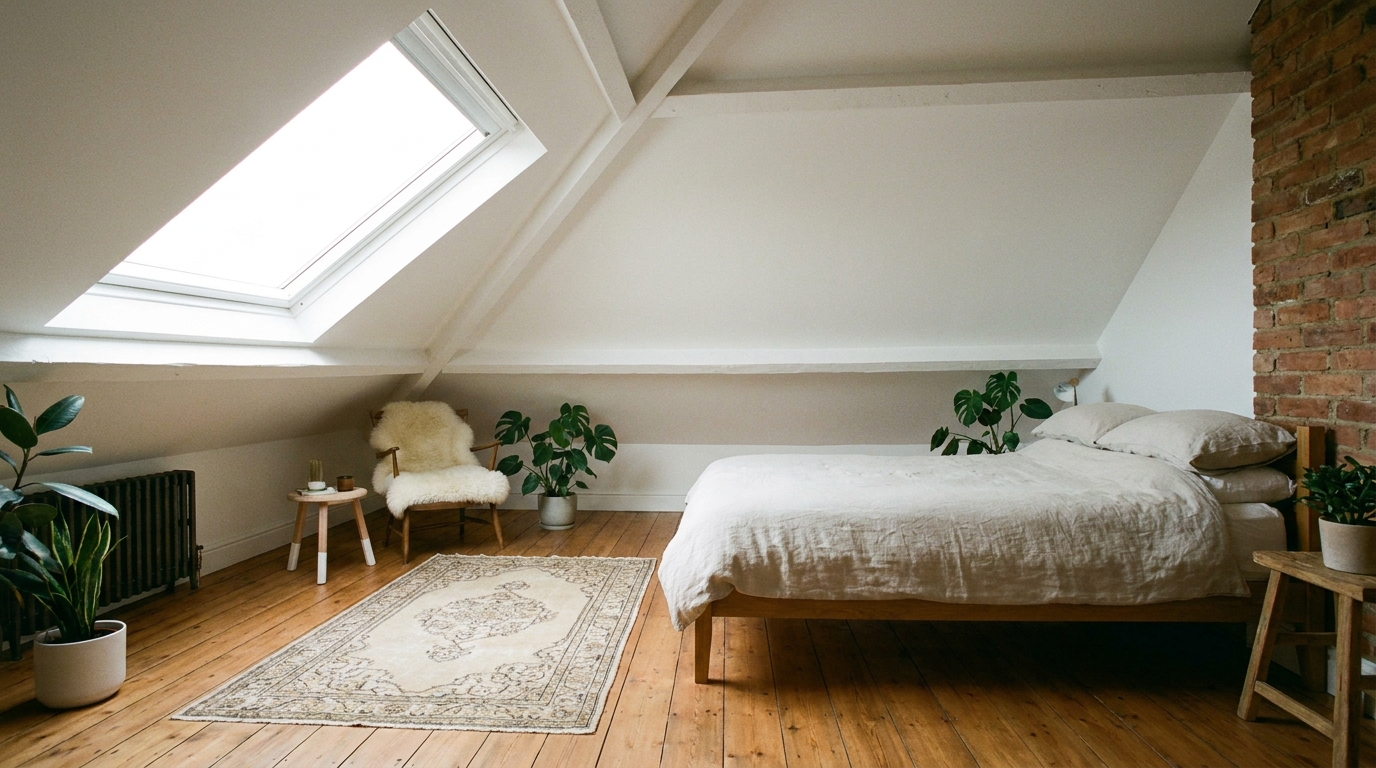
The short answer
Most UK lofts can be converted into a habitable room in some form, but not all conversions are straightforward or cost-effective. Head height, roof structure, staircase space and planning constraints are the four limiting factors. See is my loft suitable for a conversion? for a detailed self-assessment guide.
The short answer is: almost certainly yes — but the type of conversion, the cost and the complexity depend heavily on your specific loft. Every year, specialist companies convert lofts that were initially considered difficult: low pitches, trussed roofs, tight terraces and complex planning situations. The question is not usually ‘can this be done?’ but ‘what does it take, and is it worth it for this particular property?’ This guide sets out the real barriers and what each one means for your options.
Loft conversion feasibility at a glance
- Head height too low? Dormer or mansard creates headroom
- Trussed roof? Convertible with structural redesign
- No stair space? Often solvable with creative layout
- Listed building? Listed building consent required — more complex
- Conservation area? Planning permission needed for most external changes
- Flat-roof property? Typically not suitable for a conventional loft conversion
Properties where conversion is straightforward
The easiest conversions are found in pre-1960s terraced, semi-detached and detached houses with a traditional cut-rafter roof at a steep pitch. These properties often have 2.4 m or more of head height at the ridge, simple triangular roof structures that a structural engineer can adapt with modest intervention, and enough floor area for a good-sized bedroom. A Velux or rear-dormer conversion can often be scoped, permitted and built with relatively few complications. Victorian and Edwardian terraces in particular — common across London, Manchester, Leeds, Birmingham and many other cities — are well-suited to the L-shaped dormer or rear dormer conversion because of their steep pitch and deep floor plan.
Properties where conversion requires more work
The two most common challenges are modern trussed roofs and low ridge heights. Post-1960s houses with trussed roofs need a structural frame designed by a structural engineer to replace the diagonal web timbers, adding cost but not preventing the conversion. Low-pitched roofs need a dormer, hip-to-gable or mansard to create the required head height. In both cases the conversion is achievable; it is simply more involved and more expensive. See types of loft conversion for how the structural approach changes with the roof type.
| Challenge | Solution | Cost implication |
|---|---|---|
| Low ridge height | Dormer, hip-to-gable or mansard | Higher than Velux |
| Trussed roof | Structural frame redesign | +£3,000–£8,000 |
| No stair space | Reconfigure first-floor layout | Variable |
| Listed building | Listed building consent + specialist design | Significantly higher |
| Conservation area | Planning application; may limit dormer design | +£1,500–£4,000 |
The staircase constraint
The staircase is frequently the binding constraint in properties where the head height and roof structure are otherwise fine. A compliant staircase requires 3–4 metres of floor length on the first floor, and in a small terrace that may mean giving up significant bedroom space below or finding a creative solution. Some builders use an alternating-tread stair in tight situations, though these carry restrictions as part of the fire escape route — see loft conversion stairs rules. A creative designer can often find a solution where an initial layout assessment says there is none; it is worth getting a measured survey and a specific design exercise before concluding the stair cannot fit.
Properties where a conventional conversion is not viable
There are some situations where a conventional loft conversion is genuinely not achievable or not worth pursuing: flat-roofed properties (there is no pitched loft space to convert, though a room-in-roof or flat-roof extension may be possible); properties with very low ridge heights and no room on the street elevation for a significant dormer; listed buildings where the listed building consent process makes the structural changes disproportionately complex; and properties where the cost of achieving a habitable room significantly exceeds any value uplift in that local market. In those cases, the honest answer is that a loft conversion is not the right solution, and a structural extension or rear extension may deliver better results.
Get an honest assessment first
A reputable specialist will visit your property, assess the roof structure and head height, walk through the staircase options and give you a frank view of feasibility before asking for any commitment. Be cautious of any company that confirms feasibility without a site visit and proper measurement. This page is general information and not structural, planning or professional building advice. Every loft is different — the definitive answer for your property comes from a qualified specialist and, where planning is involved, your local planning authority.
Frequently asked questions
Can you convert a loft with a trussed roof?
Yes. Trussed roofs are converted regularly. The diagonal web timbers must be replaced by a structural frame designed by a structural engineer, which typically adds £3,000–£8,000 to the project cost.
What makes a loft unconvertible?
A flat-roofed property has no pitched loft space to convert. Beyond that, very low ridge heights requiring extensive structural work, combined with small floor areas, can make the cost-to-benefit ratio unfavourable. An honest specialist will advise you if this applies.
Can I convert a loft in a listed building?
Yes, but it requires listed building consent in addition to planning permission and building regulations. Listed building consent involves more scrutiny of materials, external appearance and structural methods. Use an architect experienced in listed buildings.
Is a conversion feasible without a site visit?
No reputable specialist will confirm feasibility without measuring the head height, assessing the roof structure and identifying the staircase position on site. Phone estimates based on property type are indicative only — get a site visit before relying on any figure.
Sources & further reading
- Planning Portal — permitted development and planning permission for loft conversions
- LABC (Local Authority Building Control) — building regulations requirements and structural assessment
- GOV.UK — listed buildings consent and conservation area planning requirements
- RICS — structural survey guidance on roof types and conversion suitability
This is general information about loft conversions in the UK, not professional planning, structural, building or legal advice. Costs are typical illustrations, not quotes; timescales and outcomes vary with your property, location and chosen specialist. Always consult a qualified specialist and your local planning authority before starting work.